

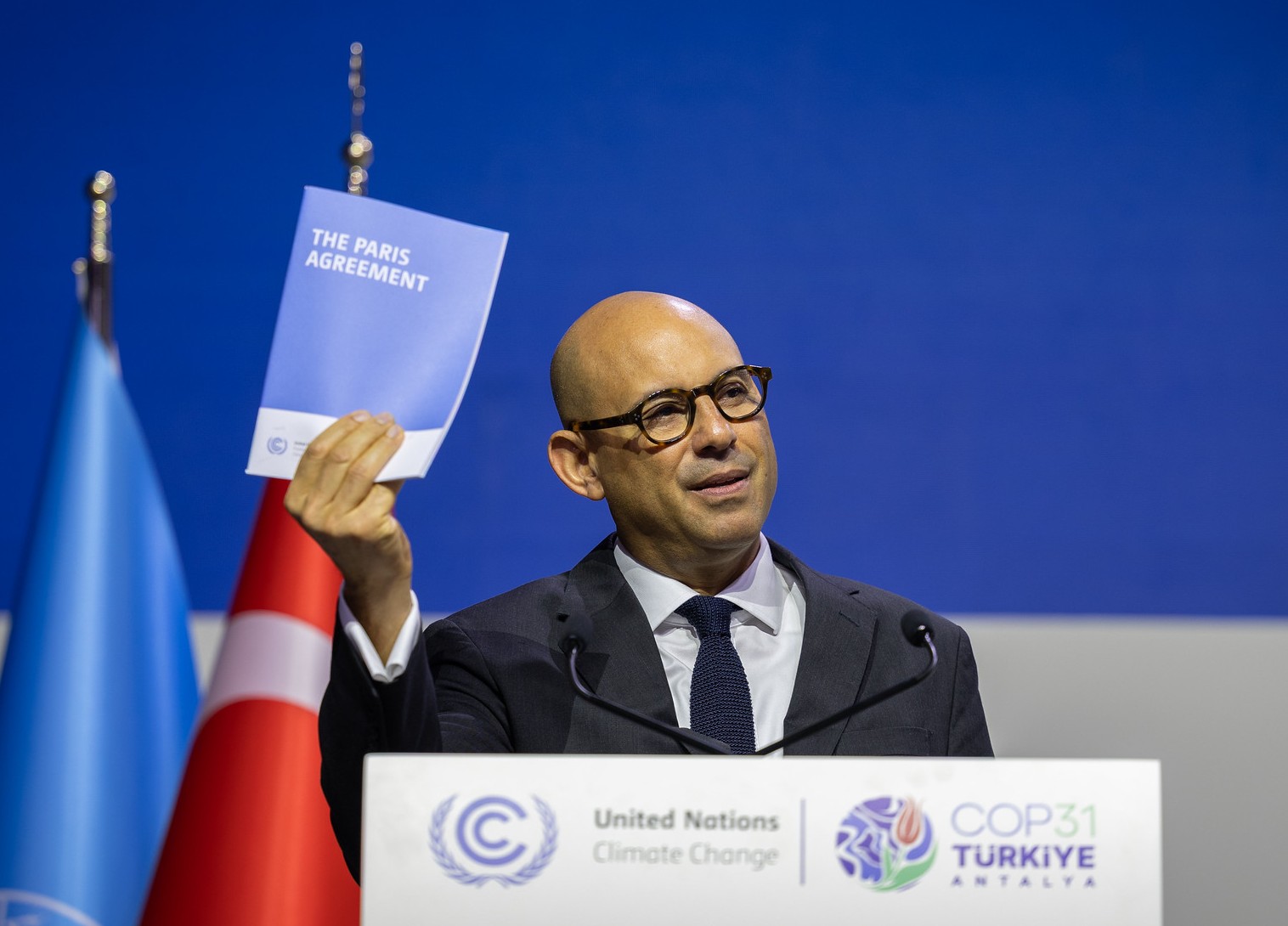
COP31 ended in Antalya without an overarching agreement on the transition away from fossil fuels. The failure weakens the international signal for a faster energy transition and creates further uncertainty for climate investment. EU Climate Commissioner Wopke Hoekstra and Ireland's Climate Minister Darragh O'Brien, speaking for the EU Council Presidency, joined a broad coalition of countries in rejecting the final draft. The proposed Antalya Pact failed even to mention fossil fuels, let alone set out a pathway to reduce their use. It offered little to close the gap between global climate commitments and the action needed to keep the Paris Agreement’s 1.5°C goal within reach. But we will always have Paris.The 2015 Paris Agreement remains in place. And while a new global consensus on fossil fuels would have been a welcome breakthrough, much of what we need to achieve has already been agreed. The challenge is increasingly one of implementation: translating international commitments into policies, investment and results.
MobiliseYourCity was born at COP21 in Paris, ten years ago, precisely to address that challenge. The Partnership recognises that ambitious targets need practical delivery mechanisms. Today it brings together 82 cities and 16 countries and has supported 75 projects across 38 countries. It has helped identify more than EUR 30 billion in sustainable urban mobility investment needs and contributed to leveraging EUR 4.4 billion for implementation. Beyond emission reductions, these investments deliver on the Sustainable Development Goals of cleaner air, safer streets, better access to jobs and services. .
Antalya was my first COP, and it was clear how much the geopolitical context has changed since Paris.. International tensions, economic competition and energy security concerns make new global agreements increasingly difficult. Yet the case for international climate cooperation remains as strong as ever. If reaching new commitments is becoming harder, delivering on those already made deserves even greater attention.
This was also the central theme of my exchanges at COP31.
On 9 November, I joined the official Blue Zone side event on walking and cycling for climate mitigation and justice, co-organised by MobiliseYourCity, the European Cyclists' Federation and the FIA Foundation. Discussions focused on why walking and cycling continues to struggle to attract investment. UN-Habitat stressed the need to integrate this infrastructure residential planning. I argued that walking and cycling should not be treated as secondary investments. They are integral to public transport systems. A Bus Rapid Transit (BRT) corridor without safe pavements or cycling access to its stations will attract fewer passengers. This undermines both its impact and its financial viability. MobiliseYourCity therefore integrates walking and cycling into the Sustainable Urban Mobility Plans (SUMPs) it supports.
The following day, at the International Transport Pavilion session "Mind the Alignment Gap: From Climate Ambition to National and Local Transport Decarbonisation Delivery", we compared the barriers to financing urban mobility in the EU, Türkiye and the Global South. The scale and context differ, but a common obstacle emerged: fragmented governance. I made the case for more partnerships like MobiliseYourCity, which bring together international partners such as the EU which provide funding and an interoperable planning model; national governments, which mobilise finance and set policy frameworks; local governments, which identify priorities and needs;, and technical experts, who support the development of SUMPs. COP31 leaves important questions about the future of international climate negotiations. But the failure to agree on a fossil fuel transition pathway should not obscure what remains possible.
The Paris Agreement still provides a common direction. We should continue to pursue stronger global commitments, while giving at least equal priority to delivering those we already have.
Ten years after Paris, partnerships such as MobiliseYourCity show how international cooperation can produce tangible results, even in a divided geopolitical environment. Supporting and scaling up of these mechanisms is not a second-best response to diplomatic deadlock. It is essential to making the commitments of Paris a reality.