

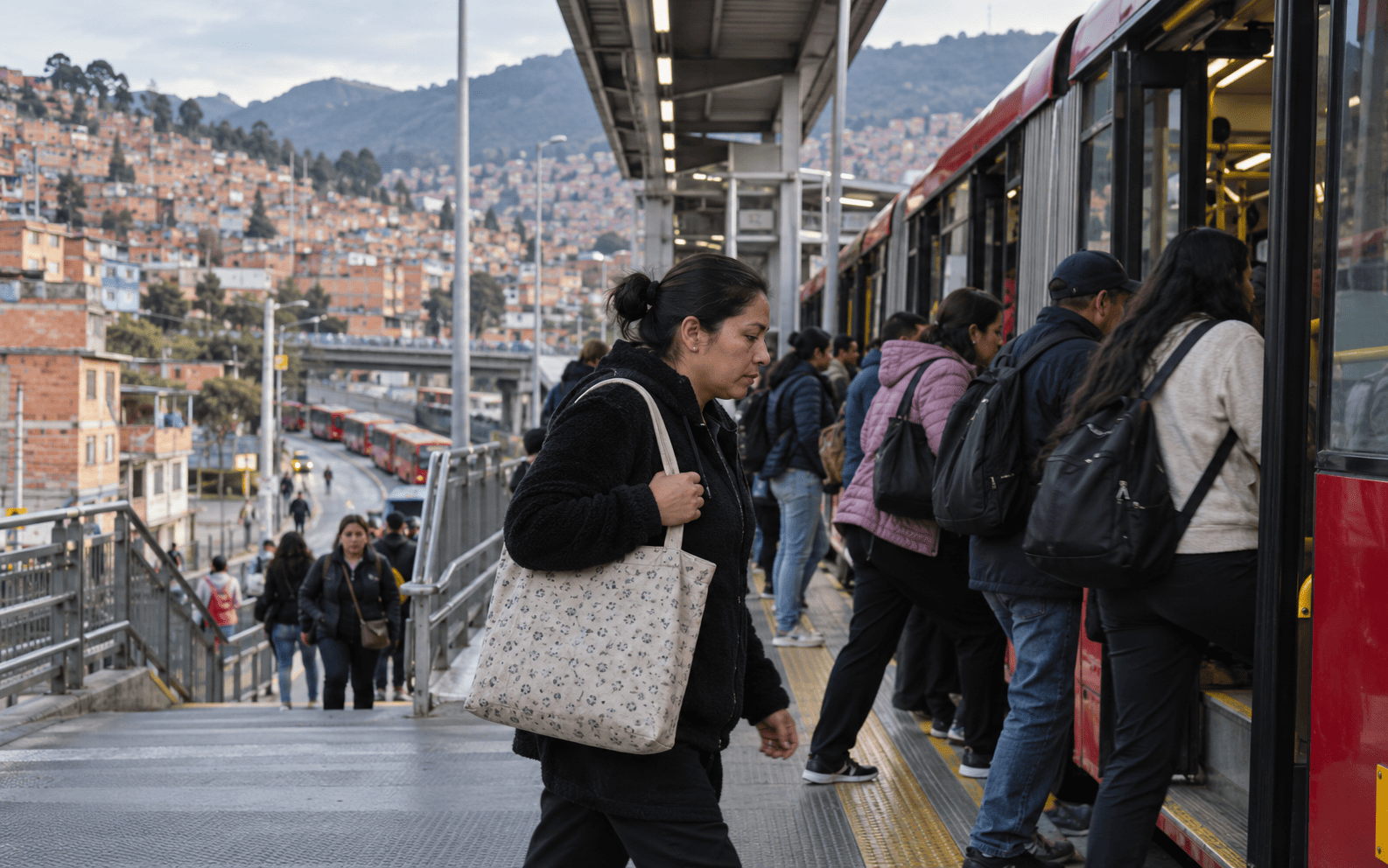
Inclusion in urban mobility depends on who is seen and who remains invisible during planning processes. When some daily experiences are missing from diagnosis, consultation, and decisión-making, they also risk remaining outside the priorities, measures, and investments that follow. Participation matters for that reason. It is one of the ways planning can better reflect the diversity of urban life and respond more fairly to different needs and constraints. In that sense, inclusion is not only a technical concern. It is also connected to broader public values such as dignity, equality, transparency, accessibility, and meaningful participation in decisión-making.
This is especially important for groups whose mobility patterns are not always well captured by conventional planning approaches. The Topic Guide: Mainstreaming Gender in Sustainable Urban Mobility Plans (SUMPs) makes this clear by showing that gender needs to be considered throughout the planning process, from data collection and stakeholder engagement to implementation and monitoring. It also stresses that inclusion should not be treated as an add-on but integrated into every layer of the planning process, and that evidence should combine quantitative and qualitative data to inform concrete interventions.
The guide is based on a review of supported SUMPs across cities in the Global South and brings together examples of how this can be done in practice. In Medan, for instance, the diagnostic explicitly addressed gender differences in mobility patterns, access to transport-, and safety concerns, using gender-disaggregated data together with surveys, interviews, and focus group discussions. In Kumasi, the terms of reference required a gendered perspective on urban mobility and included stakeholder workshops and focus groups, with women included throughout the process. These examples show that participation is not only about broad consultation but also about creating the conditions for overlooked experiences to enter the planning process in a more structured way.
Seen in this light, the guide also opens a broader question. Once planning starts paying closer attention to who is heard, what data is collected, and which forms of everyday mobility are recognised, it becomes easier to see how other experiences may also remain insufficiently visible. This is particularly relevant where forms of work shape mobility and care that cities depend on, but do not always plan around clearly enough. The discussion that follows, on domestic workers, speaks directly to this point. It shows how long, fragmented, and costly journeys, often made at off-peak hours and under unsafe conditions, can affect not only access to employment but also social life, well-being, and the wider right to the city.
Invisible Mobilities: Domestic workers
Domestic workers play a crucial role in keeping cities functioning. Their labour enables households across metropolitan areas to participate in paid work, education, and social life, yet their mobility across cities often remains invisible. For many domestic workers, long suburb-to-suburb commutes, high transport costs, and limited off-peak services impact not only their safety and determine their schedule and access to employment but also their ability to maintain social connections and wellbeing.
Domestic workers frequently record some of the longest daily travel times among occupational groups. In Bogotá, for example, their average daily travel time reaches 155 minutes, around 22% longer than the citywide average, which translates to roughly 30 extra minutes of travel every workday.
Suburb-to-suburb commutes are long and fragmented
Commutes are often multi-segmented, involving several transfers and long walking distances, with many workers spending 2–3 hours each way. In many cities, domestic workers live in distant townships or peripheral suburbs, sometimes 60–100 km from their workplaces, requiring multiple modes of transport and very early departures. Workers also report long waiting times, sometimes 40 minutes or more, or walking long distances between stops when travelling during off-peak times or when peripheral connections are unreliable. These patterns create time pressure that affects both work schedules and workers’ personal times.
Urban development patterns contribute to these challenges. As higher-income households move to gated or car-oriented suburbs, commuting distances between workers’ homes and employers increase.
Safety and off-peak travel
In addition to long distances, domestic workers often travel early in the morning or late at night, when transport services are sparse and safety risks increase. Many workers report feeling unsafe on poorly lit walking routes, in crowded or unreliable services, and during off-peak hours. These concerns often influence choice of transport mode, travel timing, and willingness to use certain routes.
Transport costs are a substantial part of workers' budgets
Limited public transport in affluent or hillside residential areas often forces workers to walk long uphill distances or rely on costly taxis to bridge the “last mile,” increasing not only time but also expenses. Long distances, several transfers, dependence on paratransit or informal services mean that transport costs can consume a significant share of migrant domestic workers’ wages and pose an economic burden on migrant domestic workers. In some context, monthly travel costs amount to the equivalent of one and a half days’ wages.
Live-in and live-out workers
Live-out domestic workers bear daily time and financial burdens from commuting, but live-in workers also face mobility constraints. On their days off, limited weekend or evening services and the cost of a round trip can restrict domestic workers in travelling across the city to visit friends or family, taking care of personal errands, or engaging in community life, which are all especially important when workers live in their employer’s home. By reducing opportunities for social life and community engagement, travel time and costs increase psychological strain for both live-in and live-out workers who must choose between rest, social connection, and the cost of travel.
Gendered mobility patterns
Regardless of whether domestic work is paid or carried out unpaid within one’s own household, domestic tasks strongly shape mobility patterns. Women, who continue to bear the brunt of domestic and care work both paid and unpaid, therefore often have more complex trips than workers without those responsibilities: many combine travel to work with school drop-offs, doctoral visits, grocery shopping, or other household responsibilities. In both cases, domestic work contributes to gendered travel patterns that involve more segments, more transfers, higher costs and greater time pressure than the commutes of many other workers.
Sources
If you’re interested in learning more, these two articles offer further insight into the often-overlooked mobility experiences of domestic workers: