


From mobility plans to investment pipelines
How SUMPs and NUMPs identify investment needs, improve bankability and help cities and countries move from ambition to implementation.
Sustainable urban mobility plans are sometimes seen as technical documents. But when they are designed well, they do something very concrete.
They help cities and countries identify what needs to be implemented, how much it could cost, what impact it could generate and how proposed measures can become credible enough to attract finance.
This is one of the main messages of the Global Monitor 2026: SUMPs and NUMPs are not only planning instruments. They quantify the investments required to shift mobility systems and help structure coherent, financeable pipelines.
Planning is where implementation starts
MobiliseYourCity supports cities and countries in developing implementation-oriented, investment-ready plans for inclusive and low-carbon mobility.
At the city level, this means supporting Sustainable Urban Mobility Plans. At the national level, it means supporting National Urban Mobility Policies and Investment Programmes.
Between 2015 and 2025, donors invested almost EUR 30 million to shift mobility planning from car-centric approaches to integrated, participatory governance.
Over the last decade, this assistance enabled 33 cities to develop SUMPs and 11 countries to prepare NUMPs. By December 2025, 16 SUMPs and 9 NUMPs were already moving into implementation.
33
11
25
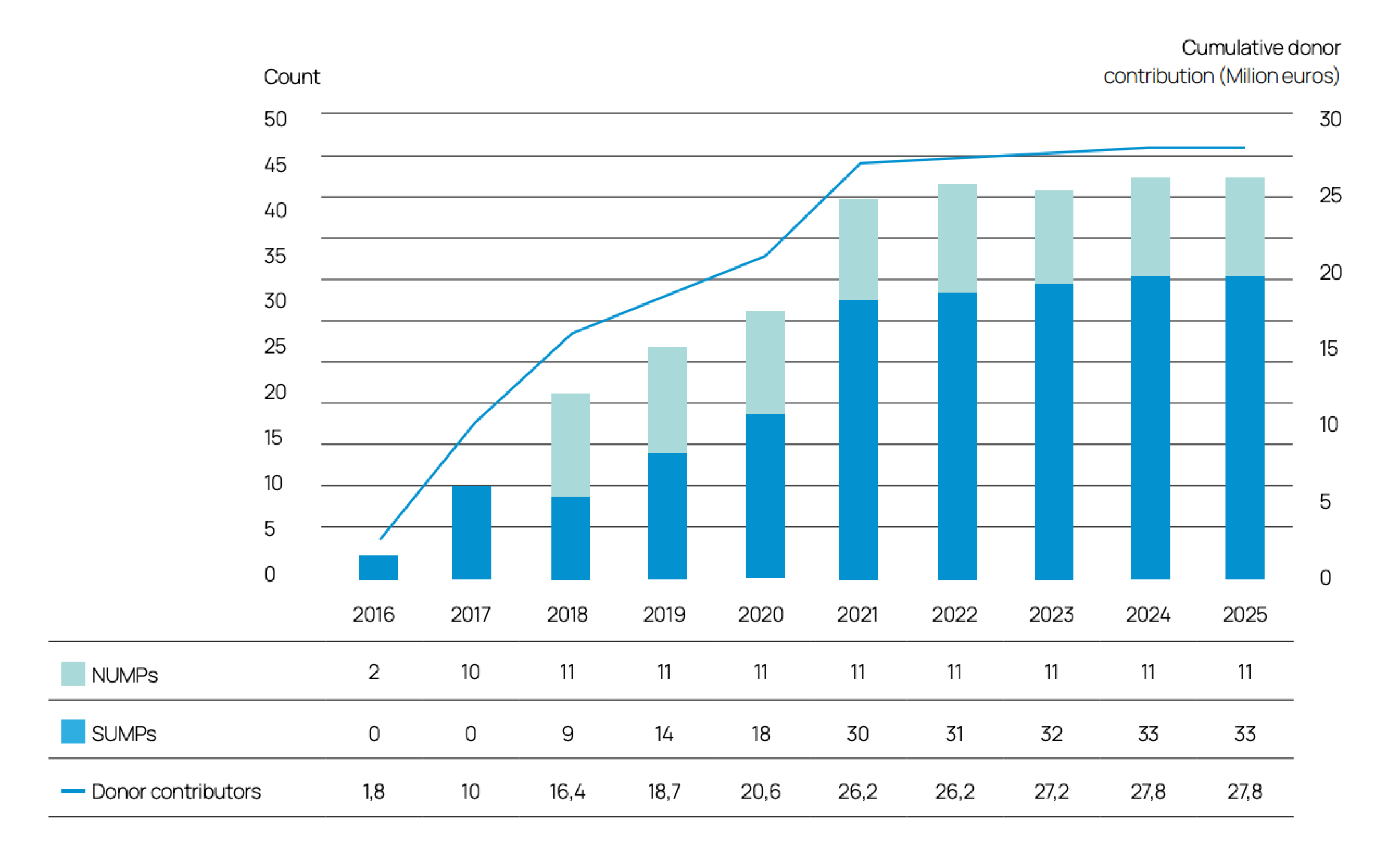
The progressive growth of SUMP and NUMP support created the basis for the shift toward implementation.
What happens when a plan puts a price tag on implementation?
The total estimated cost of implementing all measures identified in the analysed SUMP and NUMP action plans is around EUR 30.3 billion.
The full implementation of 27 analysed SUMPs would require EUR 22.3 billion. The full implementation of 10 analysed NUMPs would require EUR 8 billion.
Most of these needs relate to public transport infrastructure, including metro lines, BRT corridors, cable cars and depots. Other investments support walking, cycling, public space improvements and paratransit modernisation.
€30.3B
€22.3B
€8B
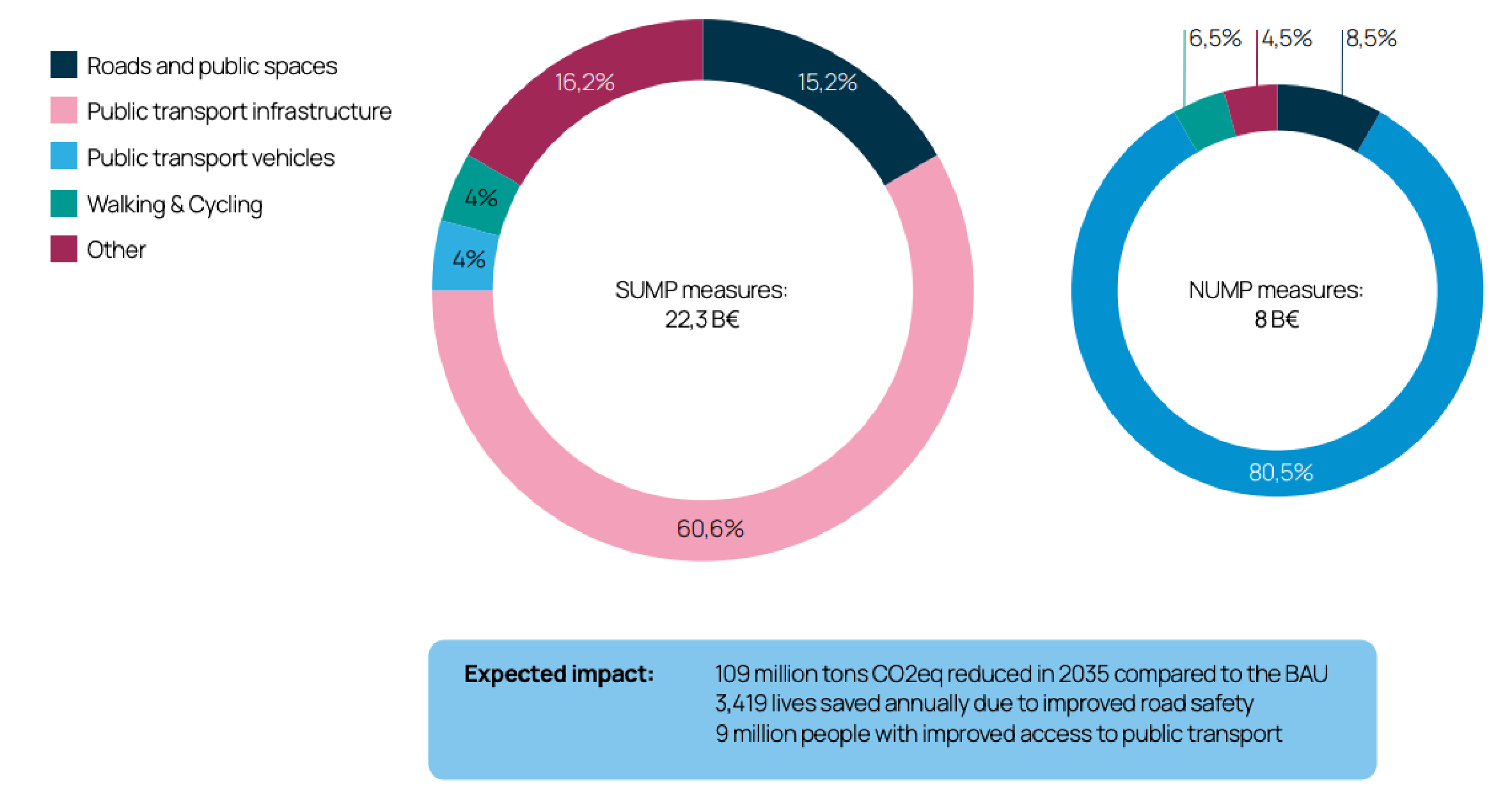
SUMPs and NUMPs allow cities and countries to communicate their needs to governments, development banks and private financiers, and to sequence programmes effectively.
Investment needs are also impact opportunities
The measures identified in MobiliseYourCity-supported SUMPs and NUMPs are expected to contribute to climate, safety and accessibility benefits.
If implemented, the analysed plans are expected to reduce 109 million tons of CO₂eq by 2035 compared to business as usual, save 3,419 lives annually through improved road safety, and improve access to public transport for 9 million people.
109M
3,419
9M
From priorities to financeable projects
MobiliseYourCity also tracks how much finance these plans have successfully mobilised from international, private and domestic sources.
Sixteen cities and ten countries have leveraged around EUR 4.4 billion for implementation, with EUR 2.7 billion secured in 2025 alone.
This growth reflects the increasing maturity of completed SUMPs and NUMPs. By embedding projects in formal plans, cities improve bankability and align investments with long-term strategies.
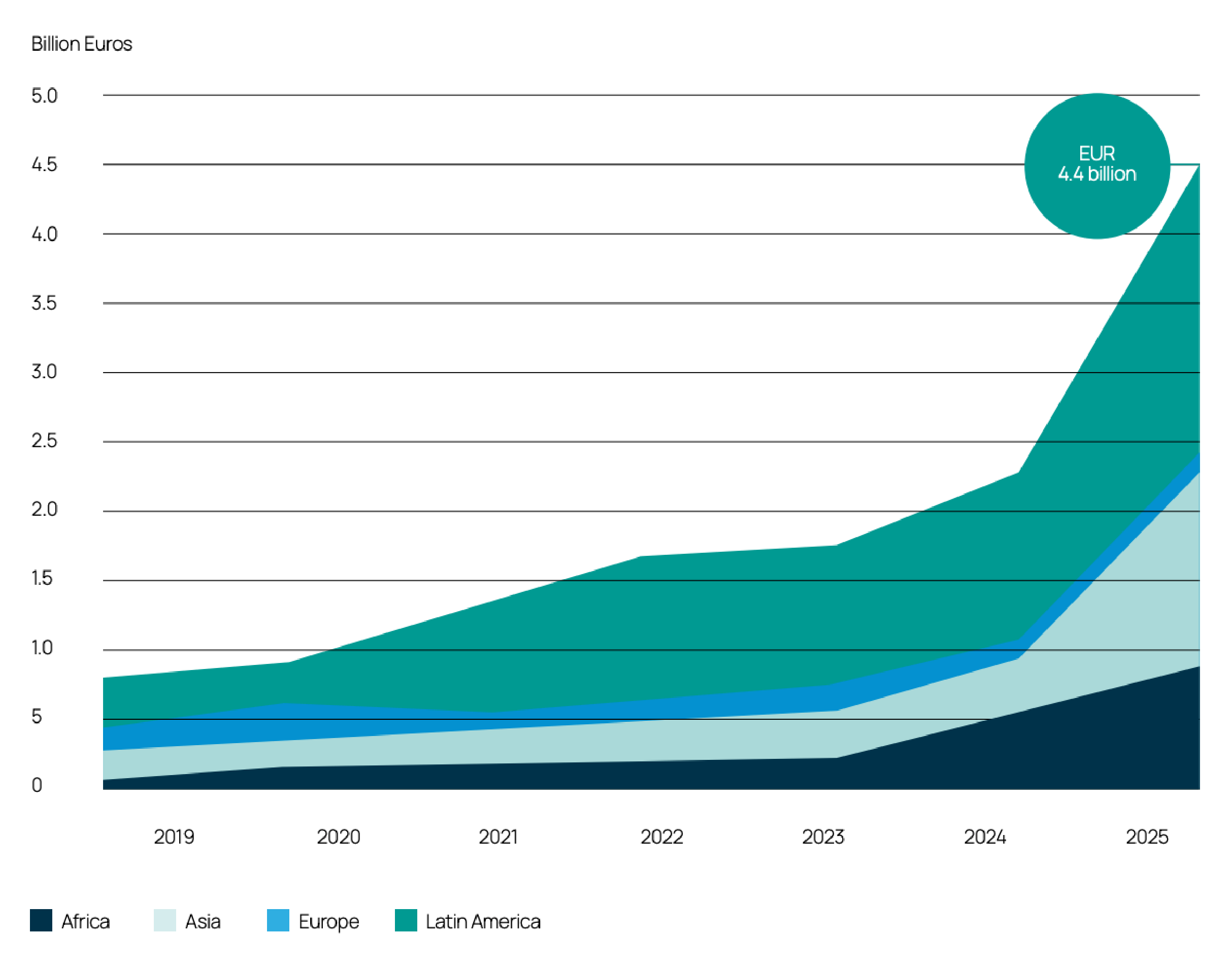
Finance leveraged shows the catalytic effect of structured mobility planning in turning strategies into bankable projects and concrete investments.
Where does the finance come from?
Public transport infrastructure still dominates leveraged finance, representing about 43% of total secured finance and exceeding EUR 3.8 billion as of 2025.
International financial institutions are the main source of financing, representing 77% of total leveraged finance. Loans account for 81% of all leveraged financing, while countries receive 75% of the leveraged funds.
77%
81%
75%
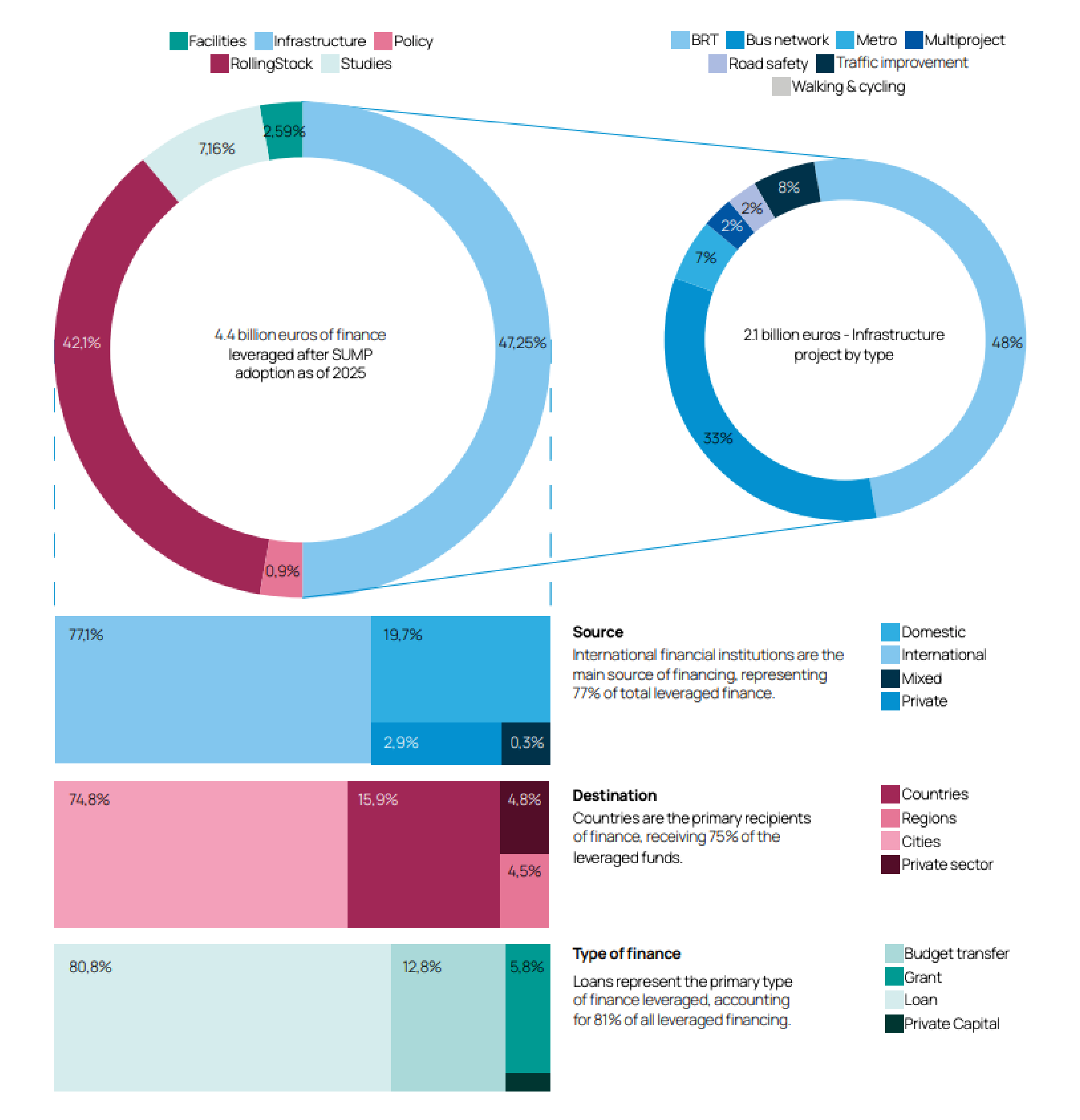
The structure of leveraged finance shows why national frameworks, international finance and credible investment pipelines are essential.
Not all finance linked to a mobility plan should be counted in the same way
Some investments were already in progress when the plan was developed. While these still shape the urban mobility landscape and may be reflected in action plans, they cannot be fully credited to the planning process.
This is why MobiliseYourCity distinguishes between leveraged finance and associated finance. Together, these categories show how structured planning supports the organisation of investment pipelines.
Leveraged finance
Finance mobilised as a direct result of a SUMP or NUMP. It includes loans, grants or domestic investments that were not secured before the planning process and are linked to measures identified in the plan.
Associated finance
Finance linked to mobility measures included in a SUMP or NUMP, but not generated by the planning process itself. It includes projects already underway, planned or financed prior to the development of the plan.
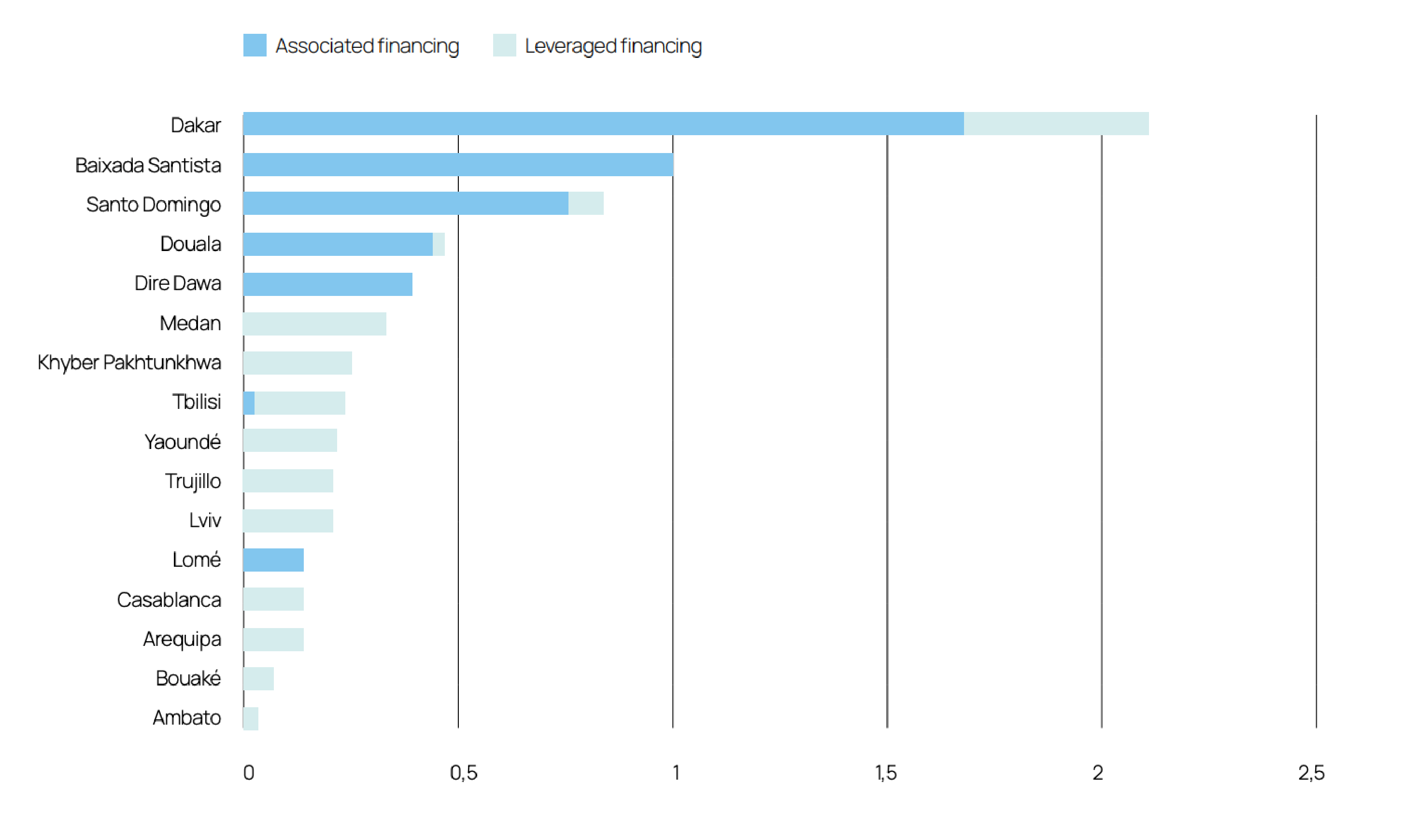
Structured planning supports investment pipelines, but not all finance linked to a plan should be attributed to the plan’s direct impact.
The lesson: planning is not the end of the process
The Global Monitor 2026 shows that SUMPs and NUMPs are most useful when they are treated not as final documents, but as the beginning of a delivery pathway.
They help cities and countries diagnose mobility challenges, build a shared vision, identify measures, estimate investment needs and structure financeable pipelines.
Planning remains central to MobiliseYourCity’s work not because planning is the objective, but because planning, when connected to implementation and finance, is one of the most effective ways to turn climate and development goals into concrete urban mobility projects.
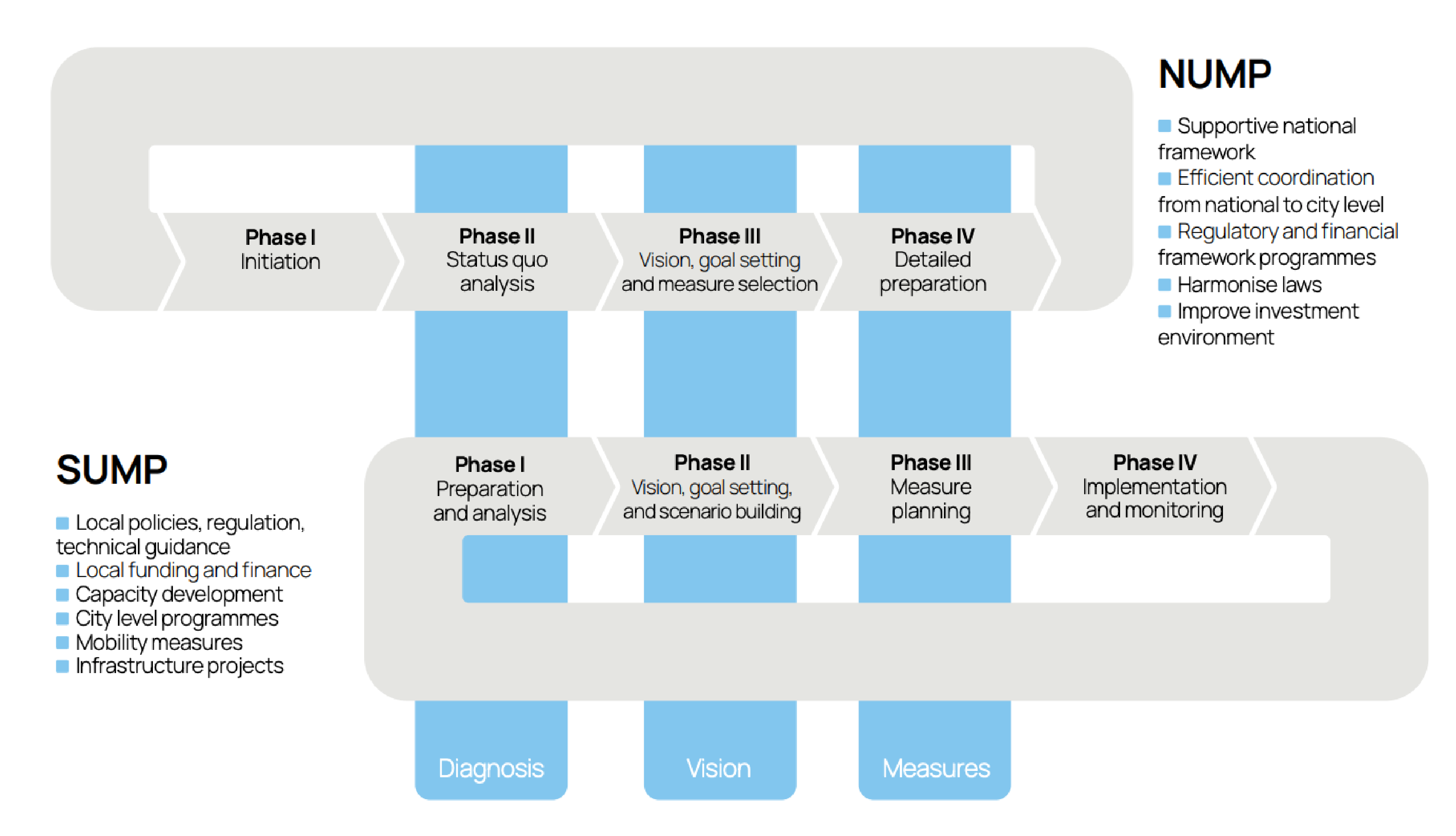
NUMPs can create supportive national frameworks, while SUMPs translate them into local measures, funding strategies and infrastructure projects.
Explore the full Global Monitor 2026
Discover the data behind MobiliseYourCity’s work to connect sustainable mobility planning, investment and implementation.